 Kim • Published 11 2026 Jun
One of the critical car components that support motion is the gearbox. Beyond that, it manages car speed and torque and improves fuel efficiency. This blog will help you understand how a car gearbox works, its types, machining processes, and lots more.
Also called a transmission box, this is a power transfer system that sends power generated from the engine to the wheel to aid motion. It consists of the gears, shafts, bearings, etc., and also controls the speed of a vehicle.

Depending on whether a gearbox is manual or automatic, components might differ. However, below are the main parts you’ll find in most cars.
These are the main components designed as a metallic disc. They contain varying sizes with different ridges and amounts of teeth and are located on the shaft.
Common types include spur and helical gears. Gears are responsible for transferring power between shafts so as to generate torque, and the larger it is, the higher the torque generated and the lower the speed.
These are of three types, including the input, countershaft, and main shaft. The input shaft, also called the clutch shaft, transfers power from the engine to the gearbox.
The countershaft, on the other hand, is connected to the input, and it also has some gears that link the input and main shaft. Lastly, the main shaft connects to the driveshaft, transmits power to the wheels, and rotates based on the car’s speed.
Bearings are located on the main and countershaft. They help reduce friction while enhancing rotation. Beyond that, they help improve efficiency and longevity, especially in high-performance applications like the F1 car gearbox and rally car gearbox.
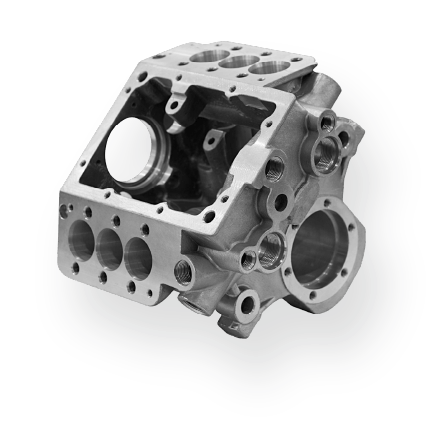
Usually created with aluminum or magnesium and with high strength, housing provides protection for the internal components of the car transmission box, thereby preventing them from dirt, extreme heat, vibration, noise, etc.

Here, we would look at how it works in a manual and an automatic car:
For a manual car, the transmission box usually has seven gears, including first, second, third, fourth, fifth, and reverse. In order to change gears, the driver presses on the clutch pedal so as to disconnect the engine from the gearbox.
After that, he chooses the desired gear by moving the lever. This lever is linked to a selector rod located at the top of the transmission.
Lower gears, like the first, usually generate the highest torque but the lowest engine speed. And lastly, the driver releases the clutch and presses the accelerator to move the car.
With a car automatic gearbox, there is an absence of a clutch or gear stick. As such, the driver works with the accelerator or brake.
And with the help of sensors, the gearbox can determine when it’s necessary to alternate gears. To change gear, the torque converter disconnects the engine from the transmission box and generates pressure using transmission fluid.
This pressure then moves the internal gear, including the sun, planetary, and ring gears, and they work together to generate the required speed.

This type usually has a gear stick and a clutch. As such, the driver can easily change gears and select speed when needed. Beyond that, it is cost-effective and can be easily maintained and repaired, although it requires expertise to use.
Here, the gear stick and clutch aren’t needed as the sensors and torque converter aid in changing gears, thereby reducing the driver’s input. They are, however, costly, complex to maintain and repair, but easy to use, and also include subtypes like:
These usually have a manual structure but with automatic control or features. As such, it is less expensive. AMT also doesn’t require the driver to handle gear changing or use the clutch; instead, the sensor is used.
The torque converter type utilizes fluid to transfer power from the engine to the transmission rather than a clutch. Because of its high fuel usage and maintenance cost, it is no longer commonly used.
DCT uses two different clutches to aid fast and smooth gear changing. They are mostly used in sports cars, f1 car gearboxes, and brands like Volkswagen, Skoda, etc.
A manual car gearbox gives the driver more control to change gears with the help of the clutch. In automatic mode, the driver has less input and control.
Both have many varying components. While a manual has parts like flywheel, synchronizers, selector fork, stick shift, automatic has a torque converter, brake band, oil pump, planetary gear set, valve body, etc.
An automatic car gearbox also enhances fuel efficiency since it helps maximize engine performance while reducing fuel consumption.
Automatic is generally easy to learn and drive, while the other requires skills like clutch control and gear shifting.
While a manual is cheaper in terms of manufacturing and repair costs, an automatic is expensive to produce and repair due to its complexity.

Gear machining processes start with the preparation of the gear blank. Usually, materials used include steel, aluminum, etc., and they are forged or cast to serve as a base for the manufacturing procedure.
Next, the gear teeth are created with methods like hobbing, which involves cutting teeth in a spiral direction, or broaching, which utilizes a toothed equipment to create accurate, complex features.
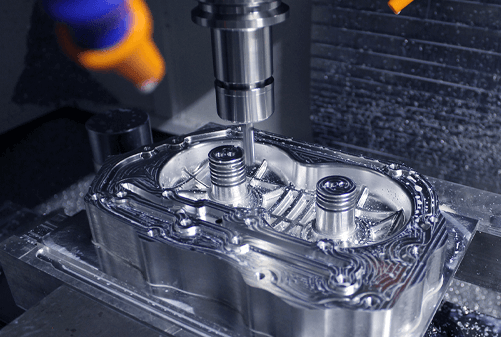
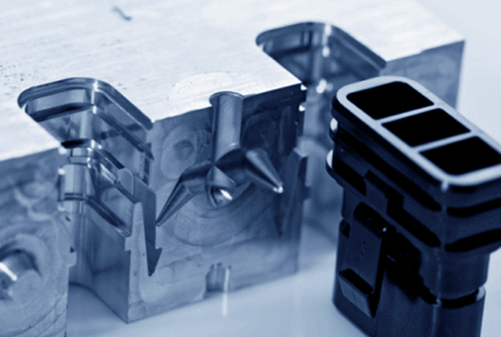
For specific applications like a toy car gearbox, injection molding might be used. While CNC milling will be the best technique for a rally car gearbox.
Heat treatment helps improve strength and wear resistance, ensuring they can withstand harsh road conditions, and procedures like carburizing, quenching, and tempering help achieve that.
With techniques like grinding, honing, and lapping, the surface finish of gears is improved. While honing helps eliminate irregularities, grinding and lapping enhance accuracy, fit with other components, and create smooth finishes.
Lastly, it is inspected for dimensional accuracy, tooth profile, geometry, and so on. With the use of Coordinate Measuring Machines, errors and deviations can be detected, thereby ensuring that gears meet quality standards.

First tip is to get the necessary parameters, like speed, weight, torque, force, etc., ready before design. All of this information will, however, be dependent on the car applications.
Aluminum is usually a preferred choice due to its lightweight and high strength. This helps reduce the overall weight of the car while improving fuel efficiency.
When designing the housing, the appropriate layout of the internal component must be considered. Beyond that, it must be strong, heat and vibration-resistant and include a lubrication system.
For the transmission box that will be used in humid environments, sealing or coating might be required. While an electric car gearbox must be designed to operate quietly, a car parking multiplayer gearbox functions in a digital environment. So each will be designed based on its operating environment.
The car gearbox doesn’t just help in power transmission and speed control, but also ensures the smooth functioning of the car. Regular maintenance is therefore needed for accurate performance.
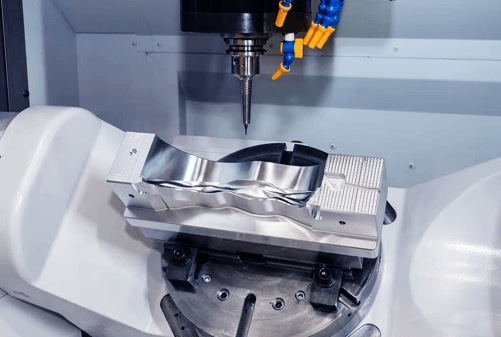
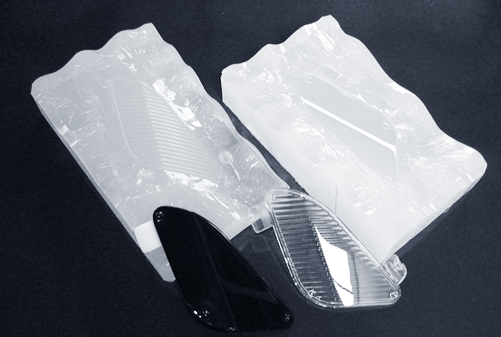
Whether you need to create a gearbox or other complex car part, AutoRapidProto is a reliable partner that helps you bring your idea to life. With our advanced CNC machining, injection molding, vacuum casting processes, etc., and our specialized finishing techniques, we ensure your part meets automotive standards. Our thorough inspection method guarantees quality and precision. Contact Us Now.

Kim oversees engineering operations, including complex process planning, DFM reviews, and solving challenges associated with high-precision automotive components. He specializes in strict tolerance control and machining complex geometries essential for powertrain modules, suspension systems, and ADAS sensor housings. Outside of work, he enjoys the precision and strategy of playing snooker.
 Knowledges
 Knowledges
 Knowledges
 Knowledges
 Knowledges
 Knowledges

Fill out the form below and our team will get back to you promptly with a personalized quote tailored to your needs.