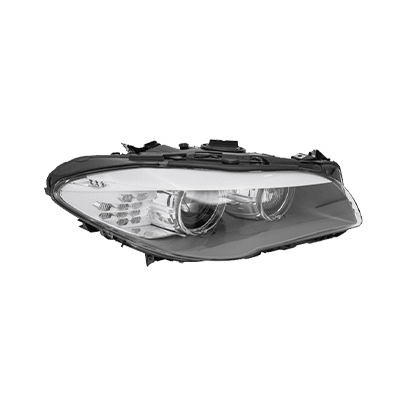
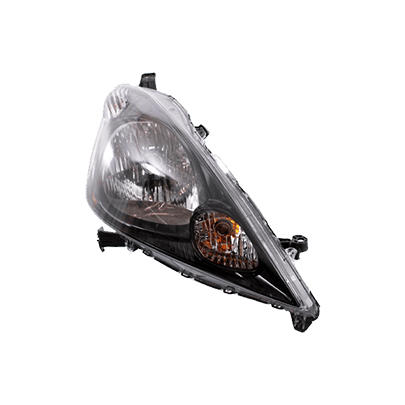
Custom Automotive Lens Prototype Machining

Optically clear lens prototype designed with high-performance alloys, perfect surface finish, and rapid delivery to meet your automotive needs.

Contact Us
Overview

Automotive Lens Prototype Manufacturing Capabilities

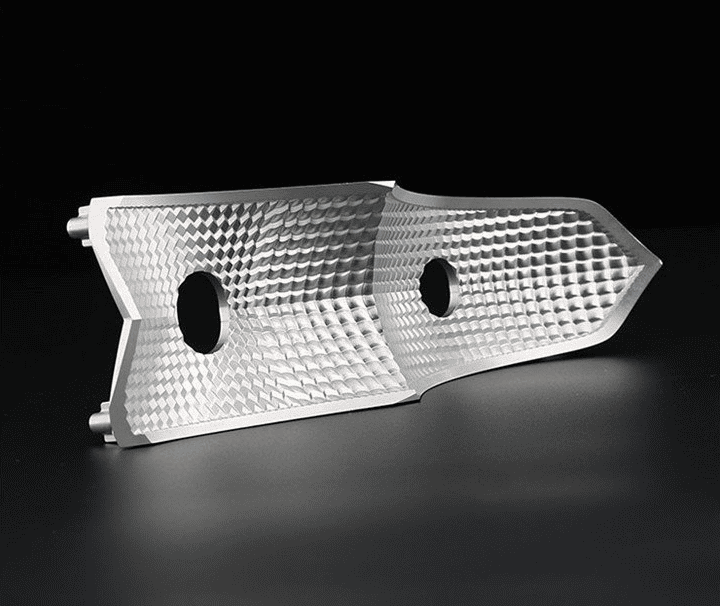
Our lens prototype manufacturing process combines CNC machining, diamond turning, and optical-grade polishing to produce clear, distortion-free surfaces with controlled light transmission properties.

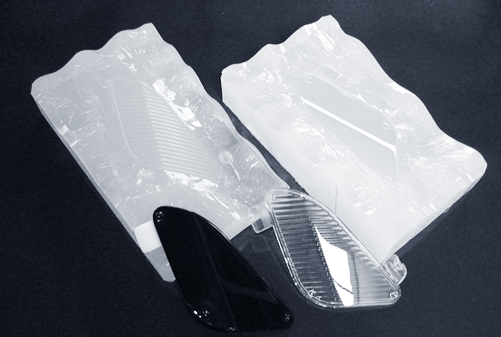
From single optical validation samples to small pre-production batches, we manufacture automotive lens prototypes in PMMA, polycarbonate, and clear resin variants, supported by surface roughness measurement and full dimensional verification.

Contact Us
Challenge

Challenges and Solutions for Lens Prototype

  • 01

    Optical Clarity Machining

    Achieving distortion-free lens surfaces requires ultra-fine cutting parameters. Single-point diamond turning with vibration-dampened spindles eliminates micro-scratches.

  • 02

    Complex Curvature Control

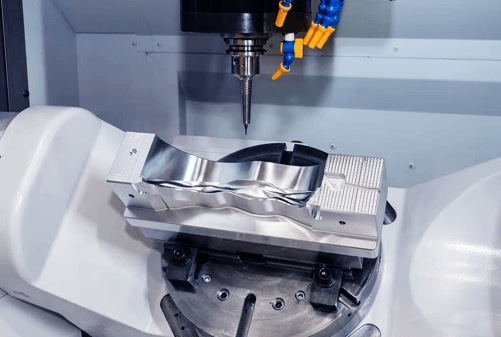
    Automotive lenses combine convex, concave, and freeform optical surfaces in a single part. Simultaneous 5-axis machining with real-time tooling accurately tracks every curvature transition.

  • 03

    Edge Definition Accuracy

    Sharp, clean lens perimeter edges are critical for correct light cutoff patterns. Finishing passes using small-diameter ball-nose tools precisely define lens borders, preventing edge rollover.

  • 04

    Material Transparency Preservation

    Aggressive machining generates localized heat that clouds transparent materials. Low-feed high-speed cutting strategies combined with air-blast cooling maintain material clarity.

  • 05

    Coating Adhesion Preparation

    Lens prototypes require hard coating or anti-reflective treatment. Controlled chemical cleaning and surface activation remove all machining residues, ensuring uniform coating adhesion.

Capabilities

Technical Specifications for Lens Prototype

Key optical, dimensional, material, and process parameters that engineers need when specifying automotive lens prototypes for lighting development and validation programs.

Contact Us
Parameters Details
Max Part Dimensions 800 × 500 × 400 mm (CNC machining); 700 × 450 × 350 mm (vacuum casting)
Dimensional Tolerance ±0.05 mm (CNC); ±0.15 mm (vacuum cast)
Available Materials PC, PMMA, ABS, heat-stabilized PC-ABS, glass-filled PA6, transparent resin
Reflector Surface Finish Ra 0.2–0.8 µm
Machining Axes 3-axis and full 5-axis CNC; simultaneous 5-axis
Wall Thickness Range 1.8 mm minimum
Prototype Lead Time 3–7 business days
Related

Explore More Parts

Why Choose Us

Why Engineers Choose Our Lens Prototype

  • 01

    Optical Precision

    Lens prototype surfaces are diamond-turned and polished to sub-micron optical clarity.

  • 02

    Quality Finish

    Every lens prototype delivers uniform Ra values verified by profilometer measurement.

  • 03

    Fast Iteration

    Revised automotive lens prototypes re-worked within four to seven business days.

FAQs

Frequently Asked Questions

Contact Us
What tolerances can you achieve for bumper prototypes?
We achieve ±0.02 mm to ±0.05 mm tolerances, verified by CMM inspection reports to ensure dimensional accuracy and reliable fitment for assembly and validation.
Do you support automotive-grade materials for functional testing?
We machine ABS, PC, PP, and aluminum alloys, supporting functional testing, structural validation, and material performance evaluation aligned with automotive prototype requirements.
Can you meet surface finish requirements for aerodynamic testing?
We control surface roughness through optimized machining and secondary finishing, achieving consistent Ra values suitable for wind tunnel testing and appearance validation.
How do you handle oversized bumper prototype machining?
We segment large parts and use precision bonding and alignment methods to ensure structural integrity, accurate geometry, and consistent performance across the assembled prototype.
What is your lead time for complex bumper prototypes?
Typical lead time is 7–10 business days, depending on geometry and material, supporting fast iteration cycles and timely automotive development and validation schedules.