Engineered
Heavy-Duty
Bracket Prototype

High-performance bracket solutions combining precision stamping and CNC finishing to deliver production-quality components for intensive automotive engineering trials.

Contact Us
Intro

Superior Quality Automotive Bracket Prototype Solutions

Precision 5-axis CNC machining and high-tonnage stamping ensure every bracket meets exact structural tolerances. We prioritize grain structure integrity and rigorous CMM inspection to satisfy the most demanding automotive safety standards.

We streamline low-volume runs through bridge tooling and rapid fabrication. Offering comprehensive finishing, including heat treatment and zinc plating, ensures your small-batch brackets are ready for immediate installation and heavy-duty field testing.

Contact Us
Challenges

Challenge & Solutions For Bracket Prototypes

  • 01

    Structural Integrity

    We utilize high-strength alloys and controlled heat treatments to ensure brackets withstand extreme mechanical loads and fatigue throughout intensive automotive durability and crash test cycles.

  • 02

    Vibration Damping

    Resonance often leads to premature structural failure. Our team optimizes geometry and material density to minimize harmonic vibration, protecting sensitive mounted components in high-stress vehicle environments.

  • 03

    Precision Alignment

    Mating complex sub-assemblies requires exacting tolerances. Using 5-axis CNC machining ensures hole positions and planar surfaces align perfectly, which eliminates installation stress during critical builds.

  • 04

    Corrosion Resistance

    Brackets in exposed chassis areas face constant salt and moisture. We provide specialized electrocoating and zinc-nickel plating solutions that meet or exceed stringent automotive salt-spray requirements.

  • 05

    Mass Optimization

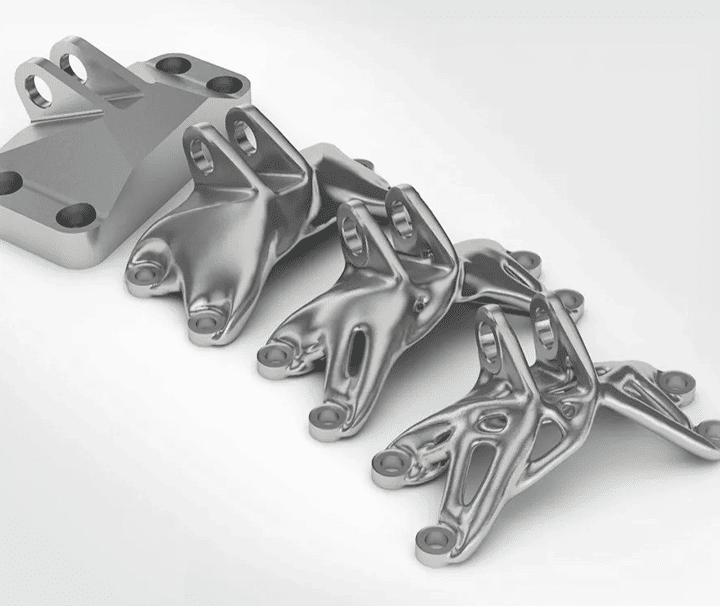
    Excess weight compromises vehicle range and efficiency. Advanced thin-wall machining and topology-optimized designs allow us to shed unnecessary grams without sacrificing any critical load-bearing capacity.

Capabilities

Bracket Prototype Technical Specs

We use advanced 5-axis infrastructure to deliver high-performance structural brackets that exceed rigorous automotive validation standards.

Contact Us
Manufacturing Parameter Technical Specification
5-Axis Machining Envelope Up to 800 x 700 x 600 mm for multi-angle mounting
3-Axis Machining Envelope Up to 2500 x 1500 x 800 mm for large chassis brackets
Dimensional Accuracy Precision machining achieving linear tolerances of +/- 0.01 mm for critical hole alignments.
Angular Tolerances Specialized 5-axis control maintaining angular precision within ± 0.02° on complex planes.
Surface Finish Range Standard machining finishes from Ra 0.8 um to Ra 6.3 um for industrial mounting
Material Versatility Processing high-strength 4130 steel, 6061-T6 aluminum, and specialized stainless steel automotive grades.
Structural Testing In-house validation capabilities for load-bearing capacity and material hardness verification (HRC/HB).
Related

Explore More Parts

Why Choose Us

Why Engineers Choose Our Bracket Prototypes

  • 01

    Proven Durability

    Our prototypes withstand rigorous mechanical stress and long-term fatigue testing.

  • 02

    Dimensional Fidelity

    We guarantee precise hole alignment and exact geometry for assembly.

  • 03

    Rapid Iteration

    We deliver production-grade brackets quickly to accelerate your development cycles

FAQs

Frequently Asked Questions

Contact Us
What tolerances can you achieve for bumper prototypes?
We achieve ±0.02 mm to ±0.05 mm tolerances, verified by CMM inspection reports to ensure dimensional accuracy and reliable fitment for assembly and validation.
Do you support automotive-grade materials for functional testing?
We machine ABS, PC, PP, and aluminum alloys, supporting functional testing, structural validation, and material performance evaluation aligned with automotive prototype requirements.
Can you meet surface finish requirements for aerodynamic testing?
We control surface roughness through optimized machining and secondary finishing, achieving consistent Ra values suitable for wind tunnel testing and appearance validation.
How do you handle oversized bumper prototype machining?
We segment large parts and use precision bonding and alignment methods to ensure structural integrity, accurate geometry, and consistent performance across the assembled prototype.
What is your lead time for complex bumper prototypes?
Typical lead time is 7–10 business days, depending on geometry and material, supporting fast iteration cycles and timely automotive development and validation schedules.