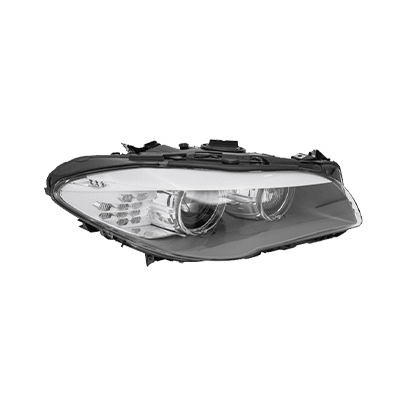
High Quality Automotive Reflector Prototype

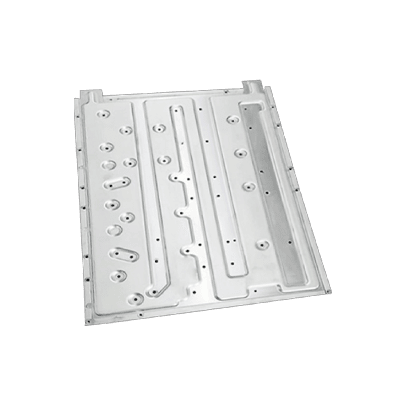
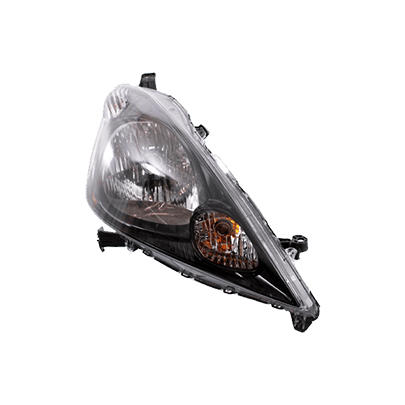
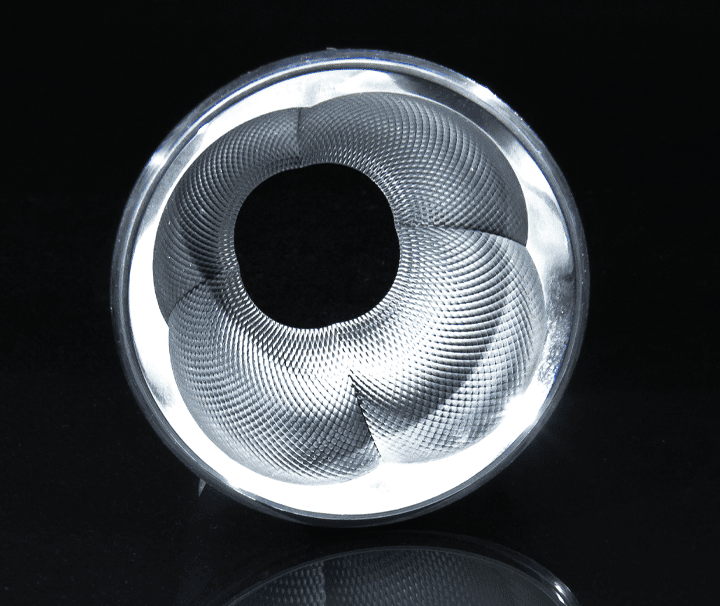
Accurate and high-quality automotive reflector prototypes designed to tight tolerances and quality surface finish with quick turnaround time.

Contact Us
Overview

Automotive Reflector Prototype Production Solutions

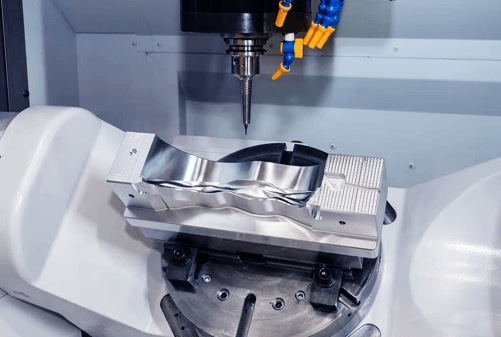
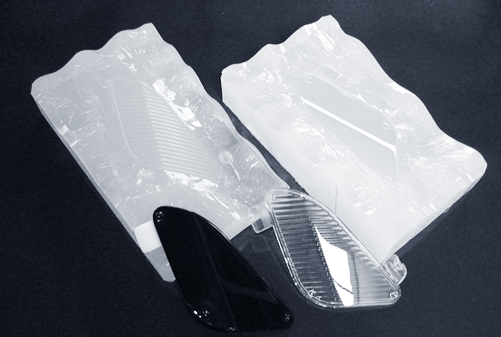
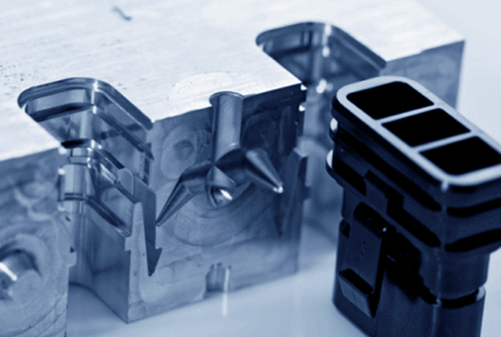
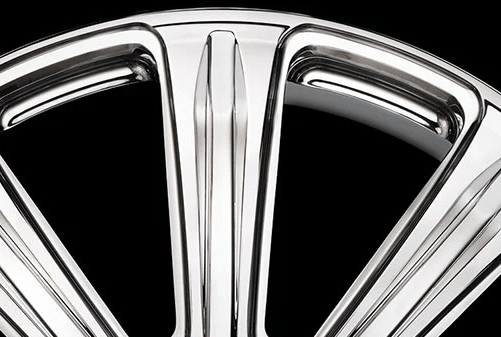
Our reflector prototype production utilizes parabolic surface machining, multi-axis contouring, and vacuum metalizing to deliver geometrically accurate reflector bowls, controlled focal point alignment, and mirror-grade finishes.

We support automotive lighting engineers through every reflector prototype stage, from initial optical geometry verification and beam pattern testing to final surface coating, ensuring each prototype delivers measurable photometric performance.

Contact Us
Challenge

Challenges and Solutions for Reflector Prototypes

  • 01

    Parabolic Surface Accuracy

    Reflector bowl geometries demand sub-micron surface consistency for correct beam focusing. Continuous 5-axis contouring reproduces parabolic profiles without geometric deviation.

  • 02

    Metallizing Adhesion

    Machined reflector substrates require contamination-free surfaces before vacuum metalizing. A structured pre-treatment sequence and plasma activation guarantee uniform aluminum film adhesion.

  • 03

    Focal Point Consistency

    Minor reflector geometry deviations shift projected beam patterns. In-process profilometer measurement confirms focal geometry accuracy, preventing beam dispersion issues.

  • 04

    Thin Shell Rigidity

    Lightweight reflector shells are prone to vibration during high-speed finishing. Custom low-contact support fixtures stabilize the prototype workpiece without surface marking.

  • 05

    Multi-Facet Machining

    Modern automotive reflectors incorporate segmented facet zones requiring individual angle control. Dedicated CAM facet strategies machine each zone independently, preserving sharp inter-facet.

Capabilities

Reflector Prototype Technical Specifications

Core optical, dimensional, coating, and process parameters that engineers need when evaluating automotive reflector prototype manufacturing for lighting development programs.

Contact Us
Parameters Details
Max Part Dimensions 700 × 500 × 350 mm (CNC machining); 600 × 450 × 300 mm (vacuum cast substrate)
Dimensional Tolerance ±0.04 mm (CNC); ±0.12 mm (vacuum cast)
Available Materials ABS, PC-ABS, heat-stabilized nylon (PA6-GF), aluminum alloy
Reflector Surface Finish Ra 0.1–0.4 µm
Machining Process 5-axis CNC contouring, diamond fly-cutting, precision multi-facet CAM strategies
Focal Accuracy Focal point deviation held within ±0.06 mm
Prototype Lead Time 3–7 business days
Related

Explore More Parts

Why Choose Us

Why Engineers Choose Our Reflector Prototypes

  • 01

    Optical Accuracy

    Reflector bowl geometry and focal point alignment verified to sub-0.1 mm.

  • 02

    Quality Standards

    Every reflector prototype passes multi-stage inspection and dimensional conformance.

  • 03

    Global Delivery

    Finished reflector prototypes securely packaged and shipped worldwide.

FAQs

Frequently Asked Questions

Contact Us
What tolerances can you achieve for bumper prototypes?
We achieve ±0.02 mm to ±0.05 mm tolerances, verified by CMM inspection reports to ensure dimensional accuracy and reliable fitment for assembly and validation.
Do you support automotive-grade materials for functional testing?
We machine ABS, PC, PP, and aluminum alloys, supporting functional testing, structural validation, and material performance evaluation aligned with automotive prototype requirements.
Can you meet surface finish requirements for aerodynamic testing?
We control surface roughness through optimized machining and secondary finishing, achieving consistent Ra values suitable for wind tunnel testing and appearance validation.
How do you handle oversized bumper prototype machining?
We segment large parts and use precision bonding and alignment methods to ensure structural integrity, accurate geometry, and consistent performance across the assembled prototype.
What is your lead time for complex bumper prototypes?
Typical lead time is 7–10 business days, depending on geometry and material, supporting fast iteration cycles and timely automotive development and validation schedules.