Headlamp Housing Prototype Machining

Precise headlamp housing prototypes with high-grade materials and thermal resistance, mounting accuracy, quality finishes, and rapid lead times.

Contact Us
Overview

Headlamp Housing Prototype Manufacturing Solutions

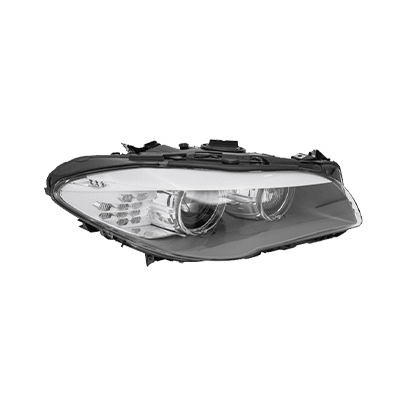
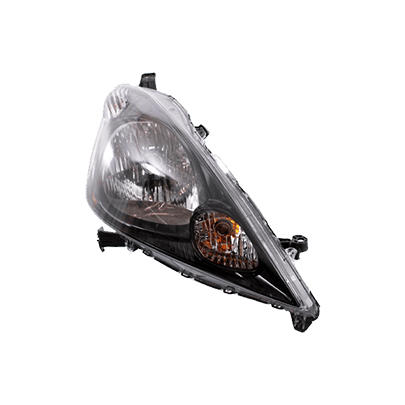
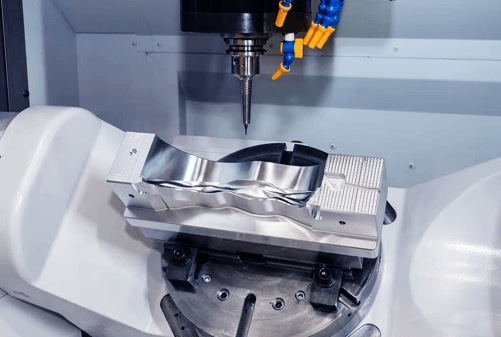
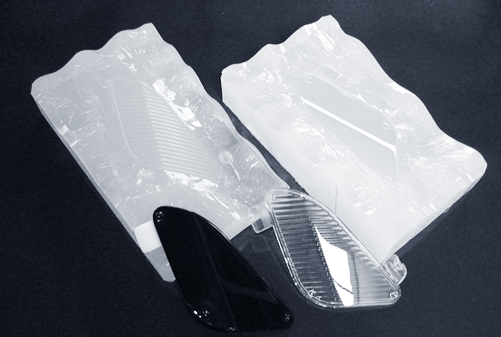
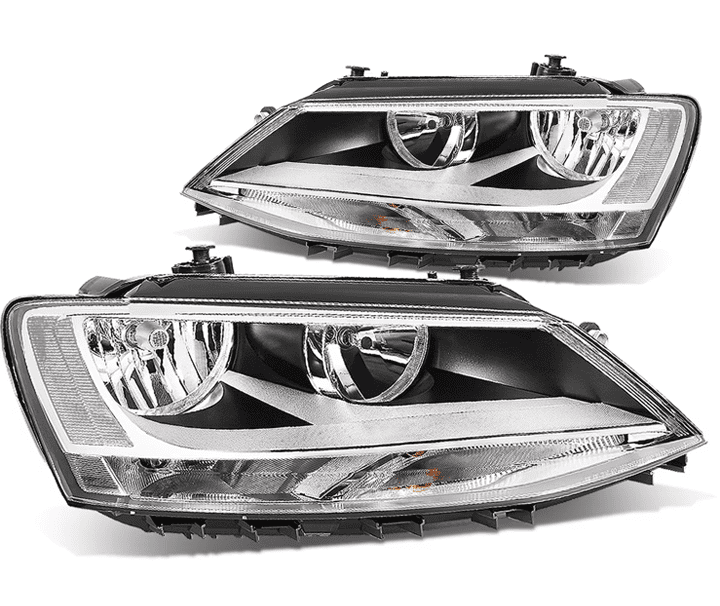
We produce headlamp housing prototypes through high-precision CNC machining, SLA printing, and vacuum casting, delivering optically smooth inner surfaces and accurate and heat-resistant finishes that match production lighting assembly standards.

From concept validation units to small pre-production batches, our headlamp housing prototypes are available in PC, PMMA, ABS, and heat-stabilized resins, backed by full dimensional inspection and optical surface quality verification. 

Contact Us
Challenge

Challenges and Solutions for Headlamp Housing Prototypes

  • 01

    Optical Surface Machining

    Headlamp reflectors demand mirror-quality internal surfaces. Diamond-turning toolpaths and fine-grain polishing achieve the low Ra values required for accurate light beam distribution.

  • 02

    Thermal Wall Integrity

    Housing walls adjacent to light sources endure sustained elevated temperatures. Selecting heat-stabilized PC grades alongside controlled machining feeds prevents warping.

  • 03

    Lens Seating Accuracy

    Headlamp housing prototypes require a precise lens mating flange. Five-axis milling holds flange flatness within tight tolerances, eliminating gaps that would compromise ingress protection ratings.

  • 04

    Deep Cavity Clearance

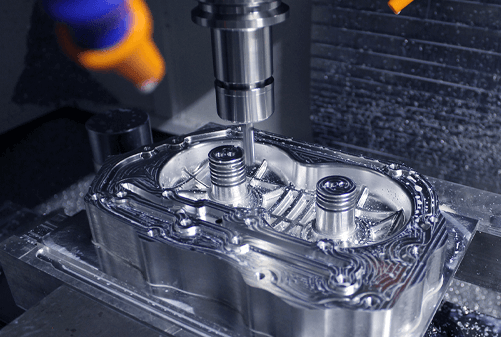
    Reflector bowl depths create significant tool reach challenges. Extended-reach tooling combined with trochoidal finishing strategies clears deep headlamp housing cavities without tool deflection.

  • 05

    Multi-Zone Surface Finishing

    Headlamp housings combine matte baffles, gloss reflectors, and textured mounting flanges in one part. Selective masking and zone-specific finishing sequences deliver the correct surface quality.

Capabilities

Headlamp Housing Prototype Technical Specifications

Critical dimensional, optical, thermal, and process parameters that engineers require when specifying headlamp housing prototypes for automotive lighting development programs.

Contact Us
Parameters Details
Max Part Dimensions 800 × 500 × 400 mm (CNC machining); 700 × 450 × 350 mm (vacuum casting)
Dimensional Tolerance ±0.05 mm (CNC); ±0.15 mm (vacuum cast)
Available Materials PC, PMMA, ABS, heat-stabilized PC-ABS, glass-filled PA6, transparent resin
Reflector Surface Finish Ra 0.2–0.8 µm
Machining Axes 3-axis and full 5-axis CNC; simultaneous 5-axis
Wall Thickness Range 1.8 mm minimum
Prototype Lead Time 3–7 business days
Related

Explore More Parts

Why Choose Us

Why Engineers Choose Our Headlamp Housing Prototype

  • 01

    Surface Precision

    Headlamp housing reflectors are machined and polished to optical-grade standards.

  • 02

    Thermal Reliability

    Heat-stabilized materials ensure headlamp housing withstand thermal validation.

  • 03

    Global Delivery

    Headlamp housing prototypes carefully packaged and delivered worldwide.

FAQs

Frequently Asked Questions

Contact Us
What tolerances can you achieve for bumper prototypes?
We achieve ±0.02 mm to ±0.05 mm tolerances, verified by CMM inspection reports to ensure dimensional accuracy and reliable fitment for assembly and validation.
Do you support automotive-grade materials for functional testing?
We machine ABS, PC, PP, and aluminum alloys, supporting functional testing, structural validation, and material performance evaluation aligned with automotive prototype requirements.
Can you meet surface finish requirements for aerodynamic testing?
We control surface roughness through optimized machining and secondary finishing, achieving consistent Ra values suitable for wind tunnel testing and appearance validation.
How do you handle oversized bumper prototype machining?
We segment large parts and use precision bonding and alignment methods to ensure structural integrity, accurate geometry, and consistent performance across the assembled prototype.
What is your lead time for complex bumper prototypes?
Typical lead time is 7–10 business days, depending on geometry and material, supporting fast iteration cycles and timely automotive development and validation schedules.