Bin • Published 08 2026 May
We tend to think of car mufflers as simple parts, but they’re actually a lot more intricate than they seem. They play a big role in controlling sound, airflow, and even how comfortable the ride feels overall. So, let’s dive into how mufflers work and what makes for a solid, dependable design.
A car muffler is an exhaust system component that is used to reduce engine noise and regulate exhaust gas discharge. It is also commonly referred to as a silencer. We typically install it at the rear, connected to the exhaust pipes.

The muffler comes in various shapes and sizes. However, it generally consists of a metal housing that takes the shape of a cylinder or an oval. The outer shell may include a heat-resistant coating to protect it during operation.
The inner part of the muffler comprises a series of chambers, perforated tubes, and baffles that determine the movement of exhaust gases through the muffler. There are also inlet and outlet pipes for the entry and exit of the exhaust gases into the muffler.
The muffler system is designed in a way that will cause the gases to slow down and be split into various chambers and pipes with holes . This results in lowering the pressure and blocking sound waves from passing through. Noise will be eliminated through damping.

We help minimize exhaust restriction, allowing gases to exit the engine more easily, resulting in improved engine efficiency and, in some circumstances, a 2-5 percent increase in power.
The improvement in exhaust flow can also work hand in hand with other engine components, such as the Car Flywheel, to achieve smooth power transmission.
In the exhaust flow process, we help the exhaust system guide gases efficiently to the catalytic converter, which helps to reduce pollution levels by lowering carbon monoxide and nitrogen oxides concentrations.
We help direct the flow of exhaust gases, which begin in the engine and flow through the car exhaust manifold before reaching the car mufflers.
In addition, we enhance the appearance of the car, particularly for sports cars and antique automobile mufflers. A variety of designs, materials, and tip options allow for a better fit with the car’s appearance.
Our mufflers are installed on the car chassis, which may affect the visual appearance of our exhaust system.
The noise created by the engine is controlled and decreased through the cancellation and delay of sound waves formed inside the muffler. The muffler installed by us decreases noise by 20-40 dBs, thus making the driving of our car very pleasant and comfortable.
Additionally, our muffler is rigidly fixed to the car chassis, preventing any vibrations and hence noise inside the cabin.

We create car mufflers with various shapes and internal layouts to control sound, improve airflow, and meet performance requirements. Each type has a unique effect on noise level and exhaust flow.
The muffler design is made from a straight pipe with perforations and packing material (fiberglass or steel wool). The exhaust gases flow straight through without encountering any obstacles. This reduces backpressure by 20–30% while allowing more air intake into the cylinders.
The noise-damping effect is not significant; thus, the noise pressure level will be 85-100dB in performance applications. This type of muffler is often used in high-end vehicles.
The muffler uses multiple chambers and baffles in a zigzag configuration. Exhaust gases must change paths several times before exiting through the tailpipe, reducing sound energy. This type of muffler reduces noise by 40-60% compared to straight-through designs.
It also maintains moderate backpressure, which helps to balance performance and quieter operation for daily driving.
These are used to counteract certain frequency sounds. Resonance chamber mufflers employ tuned cavities and holes strategically placed to induce waves to interfere.
This technique may result in the reduction of selected frequency noise by up to 50%.
They are generally employed in OEM applications to generate an ideal exhaust sound without sacrificing engine performance.

Let’s break down the key parts that make up a car muffler:
It is an external shell made of steel or aluminum; its thickness ranges from 1.0 to 2.0 mm. The external shell protects the internal components from overheating, moisture, and road obstacles. Using appropriate coatings, e.g., aluminized steel, allows us to increase its lifespan to 5–10 years of operation under normal conditions.
We load the muffler with fiberglass or basalt fiber. These materials can withstand temperatures ranging from 500 to 700 degrees Celsius and absorb high-frequency radiation. Depending on the type of muffler, this measure reduces noise by 10-25 decibels.
We use perforated steel tubes with hole diameters of 2-5 mm and aperture ratios ranging from 30% to 50%. This system guides gas flow while allowing sound waves to reach the material packed within the muffler.
We use steel brackets and rubber hangers to retain the muffler securely in place. These components serve to isolate vibrations and maintain proper alignment. A well-designed mounting system can reduce vibration transfer by more than 80%, improving comfort and preventing fatigue-related damage over time.
We add baffles to help redirect the exhaust flow. By making the gas change direction several times, they effectively cut down on sound energy. Plus, this design helps manage backpressure, usually keeping it around 1 to 3 psi for typical passenger cars.
Some catalytic converters are integrated with the muffler system. The catalyst works at temperatures of about 400–800°C, reducing gases such as CO, NOx, and HC to lower levels.

Below are the most common materials we use for car mufflers:
Stainless Steel: We chose stainless steel because it does not rust or corrode easily and is thus suitable for muffler components such as pipes and baffles.
Titanium: We use titanium because it is exceptionally lightweight, has high tensile strength, and is heat and corrosion-resistant. It is mostly used in racing and high-end vehicles where weight reduction is a priority.
Aluminum: We use aluminum anytime we need a lightweight but affordable material. Aluminum offers an excellent strength-to-weight ratio and corrosion resistance and is widely used in sports cars and mid-grade vehicles.
Carbon Steel: We use carbon steel for its affordability and superior mechanical properties. It is a feasible material for regular muffler manufacturing.

Now, let’s discuss the processes we use to manufacture car mufflers. We choose from different manufacturing methods based on criteria such as design, performance, and production requirements.
Muffler parts, such as pipes, brackets, and baffles, are joined together using MIG and TIG welding. TIG welding provides higher precision and joint quality than MIG welding, although MIG welding is faster. Welding produces a durable and strong construction, but it may cause deformation due to heat.
We bend steel or stainless steel tubes with a wall thickness ranging from 1.2 to 3.0mm. Bending the tube allows us to create exhaust flow tunnels without the need for extra joints. This approach, however, will cause wall thinning if the bending capability is exceeded.
The shaping of our muffler shells and structure uses stamping presses capable of cutting metal sheets in the range of 50-200 tons. Forming is used when a deep or complex shape needs to be made under controlled pressure. Forming is highly repeatable and fast, but it is expensive to develop the tools needed.
Holes are punched in our tubular and baffles using a diameter between 2–10 mm in order to control the air flow inside the muffler. This process gives us precision and is scalable, though there is a slight weakening effect due to punching the holes.
Mounting holes are drilled in our mufflers using CNC drilling machines. The drill holes are precise within ±0.05 mm. This makes sure that there is accurate alignment while installing the part.

Here are the surface finishing options we use for our car mufflers:
Galvanizing: A zinc coating is applied to the surface of carbon steel mufflers to resist rust and corrosion, ensuring durability even in the most demanding conditions.
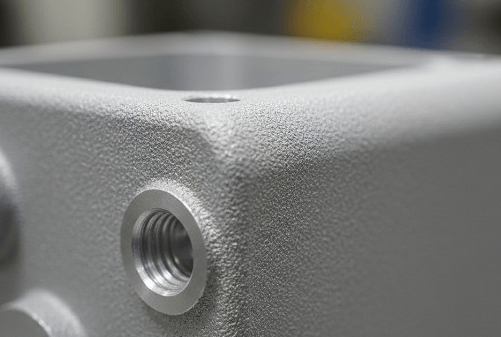
Powder Coating: Unlike liquid paint, we apply dry powder coating to our mufflers. Powder coating, once cured, provides good aesthetics and corrosion resistance.
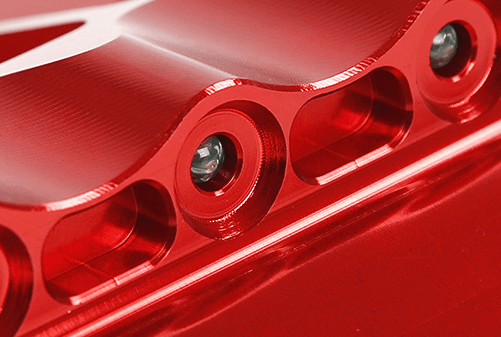
Anodizing: Anodizing involves forming an oxide layer on aluminum mufflers to enhance their wear resistance and corrosion resistance. We can opt for additional color finishes.
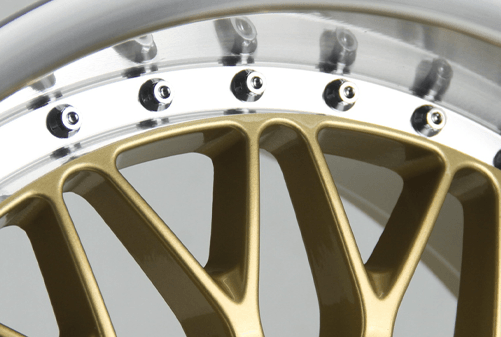
Chrome Coating: This technique is applied to give our auto mufflers a shiny appearance, making them more visually appealing and adding corrosion protection.
From my experience, a muffler appears to be a simple component from the exterior. However, each of its parts and each of the materials used has a specific purpose. Once these aspects are addressed properly, driving a car becomes more enjoyable, quieter, and more pleasurable.
That’s why we treat muffler design as a balance of sound control, performance, and durability. In the end, a good muffler is something you don’t notice; it just works. Contact AutoRapidProto for fast, reliable muffler prototypes.

Bin manages daily production, ensuring seamless workflow coordination and shop-floor efficiency. With deep expertise in high-consistency machining and specialized tooling for automotive-grade metals and alloys, he ensures every prototype meets rigorous vehicle development schedules and traceability standards. In his free time, he seeks inspiration through outdoor exploration and adventure trips.
 Knowledges
 Knowledges
 Knowledges
 Knowledges
 Knowledges
 Knowledges


Fill out the form below and our team will get back to you promptly with a personalized quote tailored to your needs.