Bin • Published 20 2026 Jul
As engineers, the automotive design process is something that we view as a systematic yet realistic process. The topic of this article deals specifically with the design and development of the automobile from concept development up until pre-production road tests.
Automotive design may be defined as the complex engineering process wherein vehicle engineers develop the form of the vehicle as well as its functionality. Designing passenger cars, motorbikes, and commercial vehicles involves balancing aesthetics with functional needs such as crash safety, noise and vibration, aerodynamics, and cost objectives, while adhering to technical restrictions.
In this design phase, our initial concepts become products that are safe, reliable and capable of meeting our customers’ expectations. That includes everything from design and prototyping to testing and validation. Since more than 92 million vehicles were built in 2023, one could argue that we should keep learning from our designs.
The automotive design process allows us to save money, increase quality, and accelerate manufacturing. It helps us keep pace with changing customer expectations – for safety, fuel efficiency, lower emissions, and more vehicle features. Good design decisions made early can save hundreds of thousands during production.

Let’s break down the automotive design process into several sub-processes to ensure that development is kept organized and under control.
First, the engineering goals are set before starting the design process. The latter includes vehicle class, price, performance parameters, and even constraints such as weight and safety features. During this phase, the vehicle architecture is also defined, including the chassis design (monocoque, ladder frame, or space frame), as it affects the structure, crashworthiness, and packaging of all other components.
For example, a compact car is designed to meet a curb weight of 1,200 kilograms or less and an Overall length of around 4 meters.
We also create preliminary proposals based on drawings and basic 3D models. We experiment with different approaches to body styling, interior configuration and scale. At this level, feasibility is our priority.
Third, we perform analysis on customer demands, relative competitor models, and local traits. Such analyses may differ by price segment, e.g., $15k to $40k for the low- and mid-market vehicles, and by energy or fuel consumption, infotainment solutions, driver assist, etc. So we can analyze the market requirements.
The full-size full-scale clays and computer renderings are developed from concept design. This is a real measure of the size, surfaces, and inner sanctum. Small modifications, such as a roof height change of ten or twenty millimeters during the design process of a car, affect the aerodynamics and visibility significantly.
This design is finalized in CAD, ready to be engineered and manufactured. The powertrain, chassis structure, suspension systems, and electronic systems design and production processes are well integrated and coordinated. The closed-end design is validated on virtual and physical test articles prior to tooling and production.

Now, let’s go over the key principles of automotive design.
We design the full vehicle cabin, from the dashboard to the seats, from the lighting to the trim and the controls, as we want to bring comfort, convenience, and branding appeal.
Our team goes from conceptual sketches to detailed CAD design through our process. We select the seating geometry so that the hip-to-heel measurement is generally around 900-1,100 mm for a comfortable sitting posture. We also take into account human factors, such as the reach zone, and have the main controls no more than ~500 mm from the driver.
The shape of the vehicle is designed to reduce air resistance and increase its efficiency. Less air drag is better for efficiency, fuel economy, and, at high speeds, stability.
In general, we aim for passenger cars to have a drag coefficient in the 0.25-0.35 range. The CFD analysis is performed at the design stage, followed by validation with a wind tunnel test at up to 200 km/h. We design the aero surfaces from the front fascia all the way to the roofline and underbody.
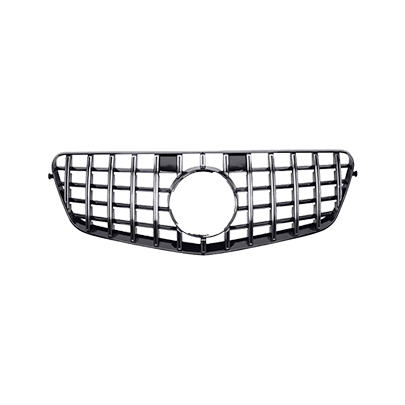
The design elements quickly identify the car as part of the brand family. Features include grille style, lighting signature, interior design, and material palette.
We want to develop a design language that can be applied to all vehicles. For instance, we may designate a lighting signature with ±10% geometric variance over the whole product range. Performance qualities and technology are chosen based on brand branding, such as sport handling or high-end interior materials.
We try to ensure an optimal field of view and minimal blind spots for drivers. Visibility issues affect safety directly.
Our aim is to provide a ~180-degree or more driver field of view. We work on the optimal thickness of A-pillars (~60–100 mm), taking crash safety concerns into account.
Also, we position mirrors, displays, and structural components in a way that does not block sightlines. Eye point simulation and human-in-the-loop testing are used to verify visibility.
The materials used in the design are based on the strength, weight, cost, durability and appearance. We are trying to keep the weight of the vehicle as low as possible, while still meeting the safety requirements. For example, substituting steel (∼7.8 g/cm3) with aluminum (∼2.7 g/cm3) yields a weight saving of about 40%.
We also emphasize sustainability, such as recycled plastics and low-VOC materials for interiors, to comply with legislative and environmental standards. The plastic, leather, fabric, and metal material choices are made relatively early on and are subjected to tests for durability, touch, feel, and even heat.
We incorporate systems such as HVAC, infotainment, ADAS, and vehicle control systems in the interior design. Our focus is on functional integration to ensure that displays are placed within ~15–30° of the driver’s eye line to avoid driver distraction. Typical cabin noise targets are in the range of ~40 – 55 dB when cruising.
Our process starts with the system architecture concept, followed by hardware integration within the interior packaging. As part of our automotive design validation process, we analyze the design using digital simulations, functional prototypes, and system testing to guarantee that everything functions as planned.

The automotive product design process not only involves making the automobile look good, but also making the design process smooth and efficient by using appropriate software at every step.
Listed below are the most important software tools we used in our automotive design process.
We begin our automotive design process using computer-aided design (CAD). With this software, we can draw 2D sketches, design 3D models, and assemble parts. This helps us to see how our designs look, analyze their fitment, and make adjustments quickly prior to manufacturing.
For instance, in SolidWorks, we developed a suspension control arm which we modified to adjust the arm’s length from 250 mm to 280 mm in order to enhance the suspension design. Since the design was parametric, the drawings were automatically adjusted. In addition, we have also used AutoCAD for technical drawings and FreeCAD for conceptual designs.
Once the part is designed, we employ CAM software in order to manufacture the part from the design. CAM software turns the CAD file into machine code, which is used by the CNC machines to manufacture the required part. It ensures less programming work is done and increases the accuracy of the machining process.
In our previous project, we made an aluminum mounting bracket on a CNC milling machine. The cutting paths, spindle speeds and feed rates were automatically generated by the CAM software from the CAD model. This enabled us to make the part with very little setup and still achieve good dimensional accuracy.
Prior to manufacturing the prototype, we use CAE software to assess the performance of our designs. This software helps us conduct simulations of FEA, CFD, and thermal simulations. Through such simulations, we can foresee any issues and avoid repeating the prototyping phase.
In another project, we simulated a 30 km/h impact on the front bumper reinforcement. The simulations indicated high stress at the rib attachment points; therefore, we modified the rib design and increased the fillet radius. After conducting the simulations again, we saw that there was less stress on the bumper.
With the increasing complexity of the projects in the automotive sector, management of the engineering data becomes as crucial as the design process itself. We have been using PLM software for organizing our CAD files, engineering drawings, BOMs (Bill of Materials), design changes, and engineering change requests.
In one such collaborative project, we managed over 50 CAD files and more than 100 engineering drawings. Through PLM software, we were able to monitor all changes and ensure that the engineers were not working with the old documents.
We cannot assess the performance of vehicles using static analysis only. For this purpose, we use dynamic simulation software to analyze the suspension behavior, steering behavior, braking, riding smoothness, and stability of the vehicle during driving.
In one of our designs, we analyzed a passenger car with a velocity of 60 km/h over a road bump of 50 mm in height. Excessive vibrations were observed in the chassis, so we changed the suspension damping parameters and performed the simulation again.
Not only is rendering software helpful in presentations, but it is also useful during engineering design reviews. The purpose of the software is to generate realistic images from our CAD models to make it easier to judge the body surface, clearances, and appearance.
For instance, during a concept vehicle development project, we imported the assembly into Blender to generate realistic renderings. This allowed us to identify the problems with clearance near the front fascia of the vehicle. Rendered models also helped present our design concepts in a professional manner.

The automotive design process doesn’t stop at a polished CAD model; it initiates true validation in manufacturing, testing and iteration. From what we have seen, the best automotive products are the result of continuous engineering improvement, with manufacturability considered from the start.
At AutoRapidProto, we assist in rapidly validating ideas through our accurate prototyping and manufacturing solutions that connect ideas with production. Reach out to us today.

Bin manages daily production, ensuring seamless workflow coordination and shop-floor efficiency. With deep expertise in high-consistency machining and specialized tooling for automotive-grade metals and alloys, he ensures every prototype meets rigorous vehicle development schedules and traceability standards. In his free time, he seeks inspiration through outdoor exploration and adventure trips.

Fill out the form below and our team will get back to you promptly with a personalized quote tailored to your needs.