 Kim • Published 19 2026 Jun
A car engine contains several components that help it perform its function and maintain performance. One of them is the crankshaft. In this guide, we explore how it works, types, tips for maintaining it, etc.
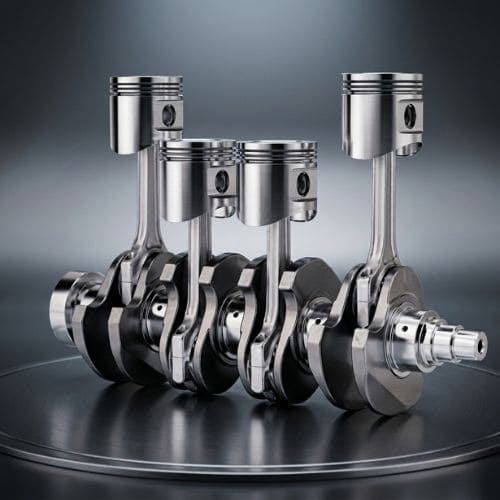
This is a mechanical part located in the internal combustion engine that changes piston movement into rotational energy that powers the car wheel. It is usually made from cast iron or forged steel since it must withstand wear and vibration, and it consists of parts like the main journal, crankpin, web, etc.
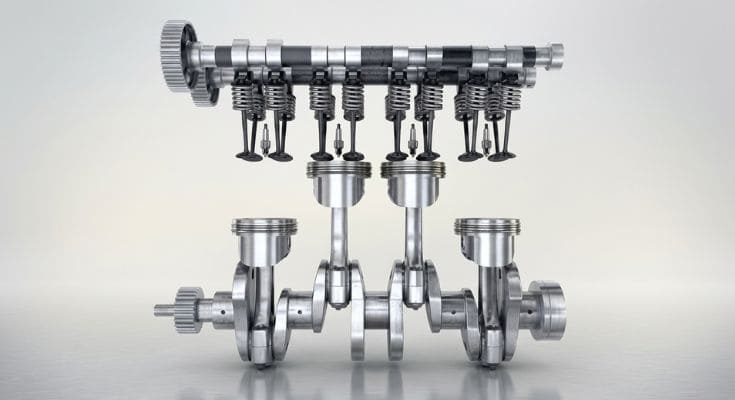
The crankshaft has several parts, including the crankpins, connecting rods, etc., that function together to move a car. Here are a few steps of how it works in a 4-stroke engine.
First, the piston moves from the top to the bottom of the cylinder, and when doing that, it pushes the connecting rod. This helps transfer motion to the crankshaft.
And the crankshaft converts this linear movement to rotational, which is then passed to the camshaft.
After that, the camshaft opens the inlet valve to allow air and fuel to flow into the engine’s combustion chamber. As such, the piston moves upward and compresses the air and fuel mixture. Also at this stage, the inlet and exhaust valves close, and the crankshaft completes one revolution.
Once compression is done, the mixture ignites and causes pressure, which helps push the piston down again. With the help of the connecting rod, the piston transmits the pressure to the crankshaft.
The engine crankshaft usually has two ends, with one linked to the flywheel. So when the crankshaft rotates, the flywheel spins and stores the motion to aid wheel movement.
At this stage, exhaust gases are discharged from the engine as the piston moves downward. With that, the camshaft opens the exhaust valve so that gas can leave the combustion chamber.

In this type, different parts of the crankshaft are produced separately and assembled together. The journal and crankpin are bored into the crankweb, and the shrink-fitting process ensures they are held tightly together. While fully built are small in diameter, its parts can be easily replaced when needed
Welded shafts are made by assembling the main journal on the two sides of the crankpin and web. The submerged arc welding method is then used to weld these parts together. This type is cost-effective, although less durable than forged.
With forged type, the material is heated and compressed into shape. The procedure is done with dies with the same shape and size as the crank. They are strong, durable, maintain dimensional stability, and are suitable for high-performance applications.
Solid single-type uses one material piece to create the components, including the journal, webs, etc. This helps maintain their structure even when exposed to consistent cyclic stress.
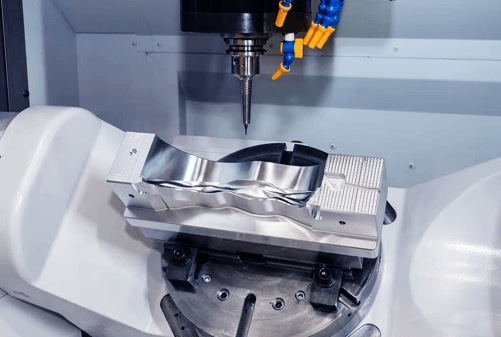
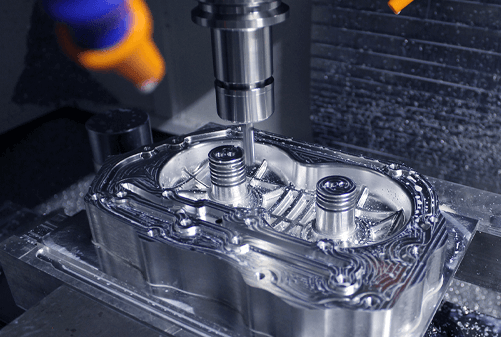
These are mostly produced from steel but also contain aluminum, molybdenum, chromium, etc. They are usually made through CNC machining, which generally takes less time to produce but is quite expensive.
Cast crankshafts are made by pouring molten material into molds. They are mostly found in petrol and diesel engines and are cost-effective. Apart from that, they can handle loads well and are suitable for large production.
In this type, the crank webs are forged and shrink-fitted into the general crankshaft bearing. Then the crankpins are machined to a smooth surface. Semi-built shafts are lighter in weight than fully built ones and can resist bending and stress, which makes them suitable for high-speed cars.

The main journal is attached to the engine, and they have bearings that help secure the crankshaft in position and help reduce friction.
This connects the crankshaft and the wheel and is located at the rear. It transfers rotational energy to the transmission system and also aids clutch operation in manual cars.
Counterweights are positioned on the crank web, providing balance to the crankshaft and maintaining its high RPM. They also help reduce wear on bearings and are vital for high-speed engine applications.
The crank pin links the connecting rod to the crankshaft. It has a cylindrical surface, and it helps convert piston movement into rotation.
The crank web is responsible for connecting the main bearing journal to the crankshaft, and they help withstand torsional load and stress.
This helps maintain the axial motion of the crankshaft, ensuring they aren’t directed vertically. They help prevent wear on the engine
Also known as crankshaft seals, they help prevent oil leakage. They are located at the front and rear ends of the crankshaft.

Crankshafts are manufactured using casting and forging techniques. Casting involves pouring molten material usually cast iron, into a mold and allowing it to cool to form the component. Forging, on the other hand, is done with steel, and it involves heating the material till it turns red hot and shaping it under high pressure.
These two techniques make them strong and durable, so they can withstand rotational stress in the engine. Moreover its components, like the journal, also go through surface hardening to enhance functionality.
When you require high-quality and precise automotive parts, including the crankshaft, AutoRapidProto is the reliable partner to choose. With our many years of automotive manufacturing experience, we have served many clients across the world.
Our processes are thoroughly inspected, and we offer no MOQ policy. From advanced CNC machining, 3D printing, and injection molding, etc., we ensure your deliveries meet your specific requirements. Get in Touch Now.
The crankshaft doesn’t just rotate; it helps resist forces from the piston, reduces vibration, and ensures smooth functioning of the engine. By regularly inspecting for seal leaks, applying appropriate oil, etc., you can avoid major issues.

Kim oversees engineering operations, including complex process planning, DFM reviews, and solving challenges associated with high-precision automotive components. He specializes in strict tolerance control and machining complex geometries essential for powertrain modules, suspension systems, and ADAS sensor housings. Outside of work, he enjoys the precision and strategy of playing snooker.
 Knowledges
 Knowledges
 Knowledges
 Knowledges
 Knowledges
 Knowledges

Fill out the form below and our team will get back to you promptly with a personalized quote tailored to your needs.