 Kim • Published 08 2026 May
Modern engine efficiency greatly depends on the effective management of the combustion gas exit. The exhaust manifold of the car is the first point that receives high-pressure gases from the cylinder head to other parts of the system. Let’s discuss the precise engineering changes and manufacturing processes.
The car’s exhaust manifold primarily collects high-energy combustion gases from the cylinder head and funnels them into the exhaust system. It is a pressure tube system that is mounted directly to the engine block and collects individual exhaust pulses into a single pulse.
This automotive component acts as a structural bridge, which is capable of withstanding high temperatures. It also maintains a sealed environment. Thus, it preserves the kinetic energy of the exit gases. The gases then flow downstream for treatment.
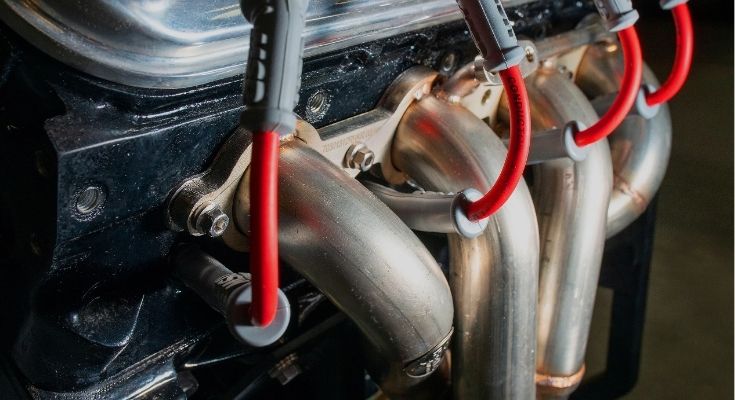
It functions as a gas-dynamic regulator that synchronizes high-pressure pulses to the engine breathing. Its main job is to carry raw combustion byproducts from the cylinder head into the exhaust stream while ensuring that back pressure does not cause the build-up of restrictions. This can be described by the following mechanical principles:
Pulse Isolation: The manifold uses individual runners for each cylinder to prevent high pressure waves from interacting with each other or reflecting back into the engine. This isolation prevents the exhaust from a single cylinder from interfering with the discharge of another.
Inertial Scavenging: The momentum of a departing slug of gas leaves behind a localized vacuum, inertial scavenging. This negative pressure zone, also called the pull-through area, is used to “pull” the residual gases from the subsequent cylinder in the firing order. Thus, this helps improve volumetric efficiency for the immediate next intake cycle.
Thermal Velocity Retention: To avoid gas shrinkage, high temperatures are retained internally. As the gas density rises due to a reduction in temperature. Therefore, heating of the manifold is required so that the flow velocity is maintained high enough to promote scavenging and clearing.

This material is favored for its low-cost and simple design and fabrication in budget-oriented applications. Nevertheless, it does not have good corrosion resisting property. Due to the permanent thermal cycling of an engine, it oxidizes and scales.
Valued for its superior corrosion resistance and high-temperature strength, this is typically used to make performance headers. Since it can endure extreme temperatures without getting damaged, it can keep the structure intact even in high temperatures.
It is the traditional material for stock manifolds because it is very durable and retains heat well. It does not warp easily. It’s heavy but thick-walled, which dampens the sound and is reliable for a long time in normal working conditions.
A material that is not generally used for main exhaust roads due to its low melting point. However, it can be used for low-temperature intake manifolds or heat shielding components. One of the properties that the metal has, which makes it extremely useful, is that it is light weight and has a high thermal conductivity. However, this metal cannot withstand the direct heat of primary exhaust gases.

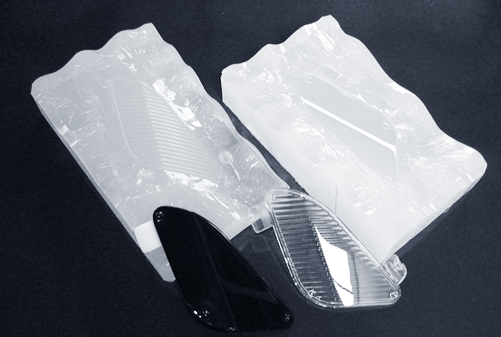
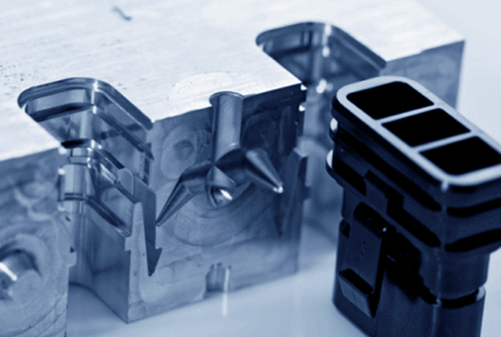
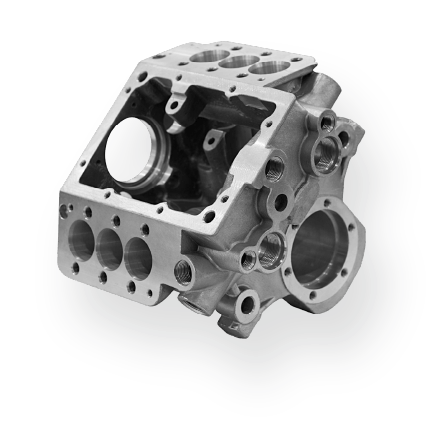
A metal-casting process that forces molten metal under high pressure into a reusable steel mold. And it is a complex shape that requires die casting to make near net shape components. The preferred method for high volume production, it allows for dimensional consistency and high structural density of manifold collectors and flanges.
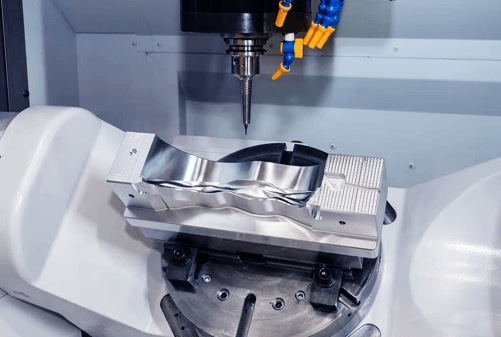
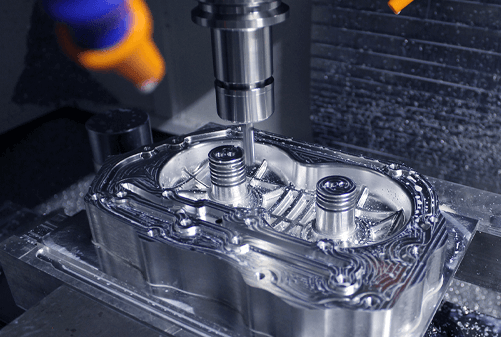
This subtractive manufacturing process uses computer-controlled cutting tools to mill components from a solid billet of stainless steel or aluminum to close tolerances. Making surfaces, including port-matched flange,s which are critical to performance and function. It requires high precision to prevent exhaust leaks or turbulence on your racing machine.
Industrial additive manufacturing- Direct Metal Laser Sintering (DMLS) builds diverse components layer by layer in metallic powders. This technology makes it possible to manufacture internal geometries and organic runner shapes that cannot be produced by conventional casting and machining processes, thus enabling advanced prototype testing.

The chemical treatment of stainless steel components by immersion in an acid solution removes free iron from the surface and improves the chromium oxide layer. The passive film produced subsequently enhances corrosion resistance, averting surface oxidation and pitting in high-heat operation.
The process of polishing reduces surface roughness by mechanical abrasives, which further reduces the area exposed to carbon and corrosive deposits. Through just a visual aspect, it was believed that a mirrored finish could help improve thermal radiation properties and lower the friction coefficient on internal mating surfaces.
This method makes use of electrochemical procedures to treat non-ferrous (aluminum) components like heat shields or special fittings. The result of anodizing is a thick oxide layer that makes them wear-resistant. Though not used on the main high-heat runners, it does help protect the peripheral manifold hardware from moisture and chemicals.

The length of each runner is computed so the reflected pressure waves arrive back at the exhaust port precisely when the valve opens. This synchronization takes full advantage of scavenging, which pulls residual gas out of the cylinder due to wave action at certain RPM ranges.
Utilizing CNC-controlled milling, we match the manifold runners to the cylinder head exhaust ports, ensuring there are no internal lips/offsets. This exact alignment eliminates transition steps that generate flow turbulence, ensuring that the transitions are laminar and parasitic pumping losses are low.
As equal length manifolds provide the same distance covered by the manifold for each cylinder, it helps in achieving the same pulse timing and uniform scavenging throughout the engine. On the other hand, unequal length designs are often employed to maximize packaging efficiency or create a certain acoustic signature, but this results in uneven cylinder pressures and less efficient gas evacuation.

Performance and Racing: High performance racing manifolds (headers) are manufactured to enhance scavenging to yield maximum hp. This arrangement has runners of tuned lengths to ensure that exhaust pulses help clear the complete cylinder at higher RPM.
Turbocharged Systems: The manifold acts as a structural mount and piping for the turbocharger in forced induction applications. The exhaust gas, having high energy, is channeled to drive the compressor with a turbine housing. Consequently, the material undergoes considerable thermal load and pressure.
Emission Control Integration: The standard automotive manifold is the major housing part (or attachment) for catalytic converters and oxygen sensors. This application aids in promptly attaining Light-off temperature for the chemical reduction of nitrogen oxides and hydrocarbon gases.
Industrial and Heavy-Duty Engines: The design of manifolds for commercial vehicles and stationary generators was for thermal stability and noise reduction. Heavy-cast parts are designed for strength and heat dissipation to prevent damage to the other engine bay electronics over long duty cycles.
Acoustic Engineering: Acoustic engineering uses manifolds to create the characteristic exhaust note of a car. Sound engineers can vary the lengths of the runners and the designs of the collector to enhance or suppress various frequencies, to either meet luxury NVH criteria or sporting sound signature.
AutoRapidProto provides high-precision fabrication of custom car exhaust manifold parts. We supply port-matched flanges and tuned runners made using advanced CNC machining, which comes with higher tolerances. We ensure gas dynamics and structural integrity for all performance and safety-related automotive applications.
The exhaust manifold is an essential part of the car that helps to increase the efficiency of the engine and the evacuation of gases. Manufacturers utilize modern materials with new engineering principles, scavenging, and pulse isolation for maximum efficiency and performance. Selecting suitable fabrication techniques and surface treatment processes is vital for their durability as well as heat dissipation.

Kim oversees engineering operations, including complex process planning, DFM reviews, and solving challenges associated with high-precision automotive components. He specializes in strict tolerance control and machining complex geometries essential for powertrain modules, suspension systems, and ADAS sensor housings. Outside of work, he enjoys the precision and strategy of playing snooker.
 Knowledges
 Knowledges
 Knowledges
 Knowledges
 Knowledges
 Knowledges

Fill out the form below and our team will get back to you promptly with a personalized quote tailored to your needs.