 Kim • Published 08 2026 May
Camshafts in cars are an essential engine component that control the motion of valves and enhance overall engine performance and efficiency. This guide will help you understand how they work, their types, major components, and lots more.
A camshaft is a metallic component (usually iron or steel) located within the internal combustion engine. Its function is to control airflow and fuel in and out of the engine cylinder by opening and closing the intake and exhaust valves.

The camshaft in cars consists of a number of components as outlined below.
The cam is the most essential component that determines how the camshaft opens and closes.
A cam follower is also called the lifter. It is located between the cam and the valve, and it transmits motion between the two.
This structure supports the movement of the whole structure, and it is usually linked to the crankshaft.
The shaft supports the other component, including the lobes, and it rotates within the engine. It must have a high strength as it operates under high stress and temperature.
Bearings ensure that the shaft is kept in position. It helps eliminate friction within the camshaft, and it has equipment for changing oil within the camshaft in cars.
Also an important component, the lobes control each valve, and it aids the camshaft in exchanging fuel-filled gases.
This links the camshaft to the timing chain. It also manages cam crank timing, thermal expansions, and vibrations.
The main function of the camshaft in cars is to open and close the intake and exhaust valves at appropriate times. It works together with the crankshaft, and it is linked through a timing belt or chain. With that, it rotates when the crankshaft is moved by the pistons.
During this rotation, the cams slide against the valve to cause an opening and closing of the intake and valves. Perfect timing is crucial here, as a little misalignment could affect functionality or the entire engine.
While earlier designs of camshafts in car engines focused on managing valve timing, modern ones help improve engine power, airflows, and emissions.

This type of camshaft in cars works with a hydraulic lifter that utilizes oil pressure to eliminate wear and protect engine parts. This design has been in existence for a long time, they are quite affordable and generates a high power rate.
Although they may appear flat and simple, they usually have some complex geometries. Also, its hydraulic lifter has a wide circular surface, and the taper helps ensure the lobe is properly confined.
Roller camshaft utilizes lifters with small rollers that rotate with the cam. They are more costly than flat tappets but enhance fuel efficiency, reduce friction, and ensure longer lifespan.
There are also two different models, including mechanical and hydraulic roller camshafts. While mechanical is cheap and powerful, it requires regular checkups. Hydraulic, however, is more expensive and complex
This is also called a barrel or drum cam, and it usually has its lobes located on the cylindrical shaft. It has a simple design and is mostly found in passenger cars. Beyond that, it has a groove on it which aids the movement of the cam follower.
Also referred to as the disc clam, they have cams that are organized in a radial position within the shaft. They have a shapeless contour plate that converts the cam motion to that of the follower.
A conjugate camshaft usually has two rollers that link the cam followers together. These rollers help control the movement of other components so as to eliminate noise.
They have a spherical design with a groove on them. They are highly precise, and they provide multiple-directional movement.
This utilizes a wedge-shaped cam to allow for movement. Also, the driver maintains a sliding motion towards the camshaft.

This offers cost effectiveness, great strength, durability, and wear resistance. It belongs to the grade 17 cast iron, contains 1% chrome, and can be used as an alternative to steel. It is suitable for many passenger cars and engine applications involving overflow of oil.
This material has an extremely high strength and a surface hardness of about 55-60 HRC. It has about 1% chrome constituent, resistance to wear, and is perfect for the casting production method. Although it is expensive, it produces a high-quality camshaft component that can withstand harsh conditions.
Carbon steel also offers toughness, hardness, and high strength, which makes it suitable for roller camshafts.
Nitriding steel EN 40B has a surface hardness up to 700HV after the nitriding process. The material is valued for the camshaft because of its strength-to-weight ratio.
Beyond these materials used, many people wonder what the black coating on camshafts in cars is. They are usually manganese phosphate coatings, and it acts as a protective layer and a dry lubricant to prevent friction and wear.

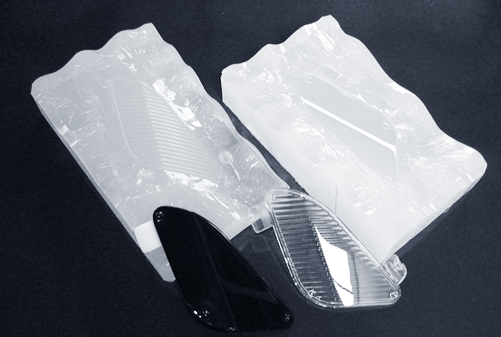
In this method, molten material is poured into molds and allowed to cool and solidify to form the component. This is a common method used for a camshaft in cars and other car parts, and chilled cast iron is the main material here. Casting offers cost effectiveness, and it’s suitable for complex geometries.
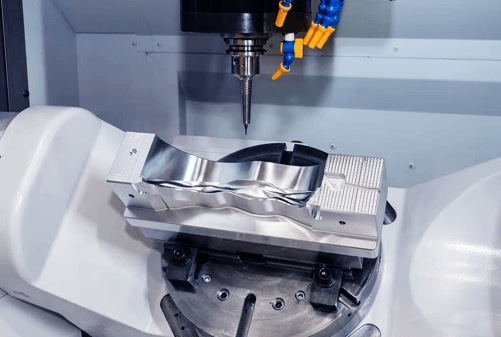
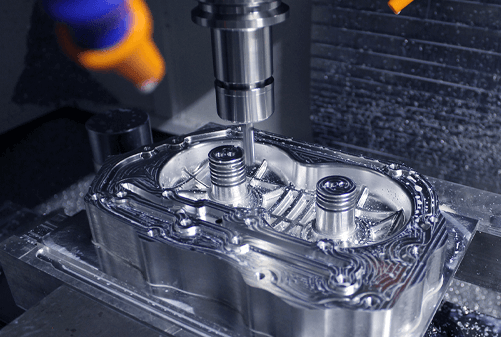
This involves using computer-controlled tools to remove materials from a workpiece so as to create the desired components. Using materials like steel and cast iron alloys, the process can achieve tight tolerances up to 0.001mm for automobile parts, including camshafts. CNC machining is also suitable for custom and complex camshaft designs.
When the camshaft in cars begins to fail, it affects other parts of the engine and overall performance. Looking out for some symptoms will help prevent total damage. These include noisy tapping sounds, flashing check engine light, metal particles in engine oil, cylinder misfires, increased gas emissions, wear and damage on the lobes, and so on.
To fix this, the camshaft in cars should be replaced in situations when the damage is severe. However, they can be properly machined again or welded when only a few issues are involved.
Whether your car part project involves a single prototype, small batches, or full production, AutoRapidProto is the reliable partner to consider. With our advanced machining facilities, team of professionals, and material expertise, we deliver precise and high-quality components, including camshafts. Reach out today for a seamless collaboration.
A camshaft in cars not only controls the movement of air and fuel from the engine, but they also aid efficient fuel consumption and the overall engine performance. As such, you must understand how they work to prevent consistent repairs or damage.

Kim oversees engineering operations, including complex process planning, DFM reviews, and solving challenges associated with high-precision automotive components. He specializes in strict tolerance control and machining complex geometries essential for powertrain modules, suspension systems, and ADAS sensor housings. Outside of work, he enjoys the precision and strategy of playing snooker.
 Knowledges
 Knowledges
 Knowledges
 Knowledges
 Knowledges
 Knowledges

Fill out the form below and our team will get back to you promptly with a personalized quote tailored to your needs.